
What is Biosecurity Waste and How Is It Managed in Australia?
Requirements in Australia.
2026, May
Biosecurity waste plays a critical role in protecting Australia’s environment, agriculture and public health. Here’s how it’s managed safely and in compliance with regulations.
What Is Biosecurity Waste?
Biosecurity waste (also referred to as quarantine waste) includes any materials that may pose a risk to Australia’s environment, agriculture, economy or public health. This type of waste is strictly regulated under Australian biosecurity legislation and must be managed through approved collection, transport and disposal systems.
It typically requires specialised handling processes to ensure harmful organisms, contaminants or materials do not enter the wider environment. Because of this, strict containment and traceability measures are essential at every stage of the waste lifecycle.
It typically requires specialised handling processes to ensure harmful organisms, contaminants or materials do not enter the wider environment. Because of this, strict containment and traceability measures are essential at every stage of the waste lifecycle.
Who Produces Biosecurity Waste?
Biosecurity waste is commonly generated by industries involved in international trade and regulated goods movement. This includes airports and airlines, ports and shipping operators, freight forwarders, quarantine inspection facilities, bonded warehouses, food importers and manufacturing businesses.
These industries operate under strict biosecurity controls, meaning all waste must be securely managed, transported and disposed of in accordance with Australian regulatory requirements.
- Airports and airlines
- Ports and shipping operators
- Freight forwarders
- Quarantine inspection facilities
- Bonded warehouses
- Food importers and manufacturers
Why Compliance Is Critical
Non-compliance with biosecurity waste regulations can result in significant environmental risks, legal penalties and operational disruptions. It is essential that waste is managed by an approved provider with the correct systems, training and accreditation in place.
Compliance ensures not only environmental protection but also operational continuity for businesses working within regulated industries.
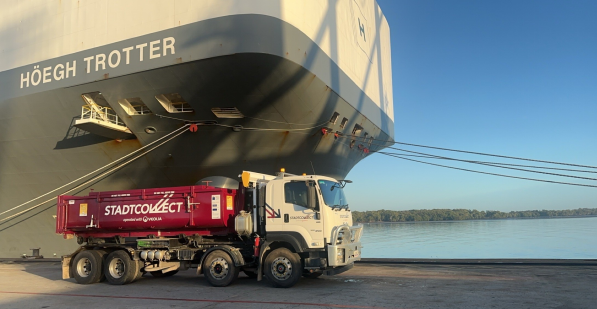
Biosecurity waste must be managed with strict control, traceability and compliance at every stage.
How Biosecurity Waste Is Managed
Treatment methods may include incineration, autoclaving or deep burial depending on the waste type. Full documentation, reporting and traceability are maintained throughout to ensure compliance with Australian biosecurity standards.
How StadtCollect Supports
Biosecurity Waste Management
StadtCollect provides fully compliant biosecurity and quarantine waste services across ports, airports and regulated facilities in South East Queensland. Our systems ensure secure collection, licensed transport, full traceability and approved disposal methods in line with Australian biosecurity requirements.
This allows businesses to maintain compliance while ensuring waste is handled safely, efficiently and with complete documentation at every stage.